
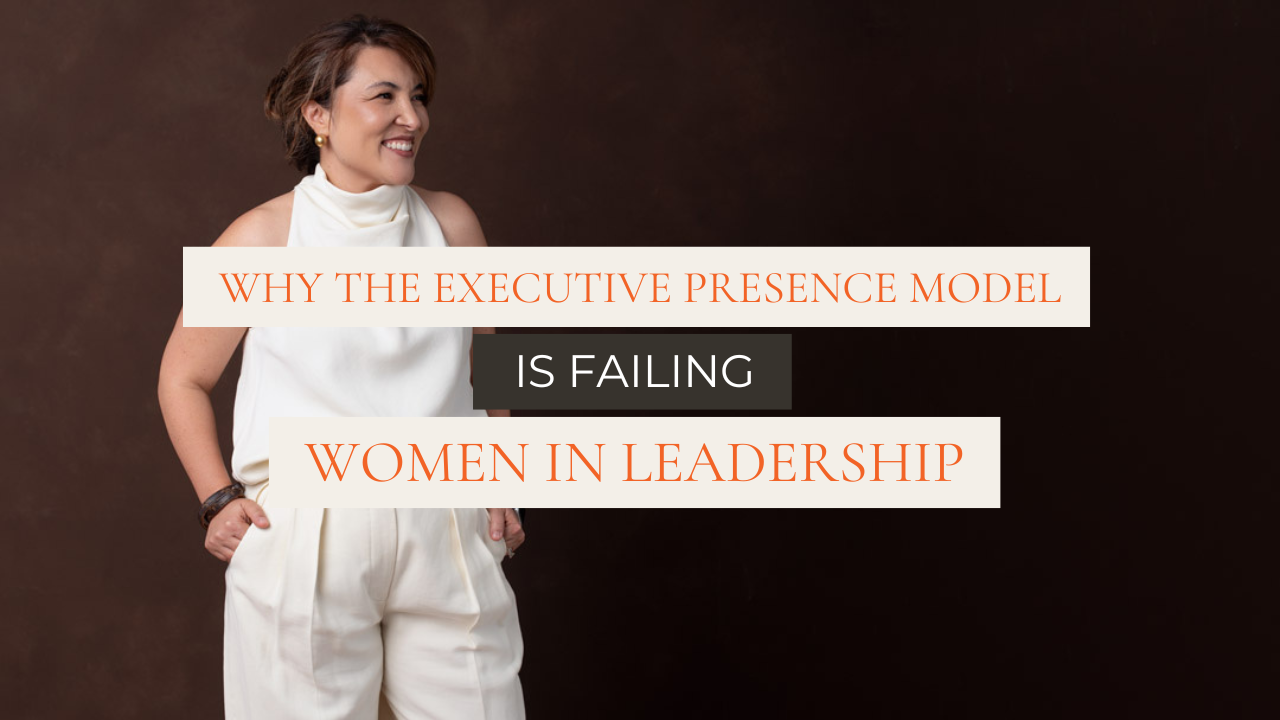
Why The Executive Presence Model Is Failing Women in Leadership
Tired of hearing 'executive presence', and you may or may not need it? The main executive presence framework most leadership programs still teach or coach on was built on a particular premise: that there is one consistent professional self, that presence is built around that self, and that being experienced consistently across rooms is the marker of credibility.
That model was sustainable when work and life had different structural boundaries, but the women operating at mid to senior levels today are not running that life. They are leading complex teams while managing complex lives, mothers and partners and daughters and friends, running households alongside running organisations, doing all of it in the same week, often inside the same day.
For that life, the executive presence model is not generating presence, it is generating fatigue at a level most women in leadership have not yet had named for them.
The cost is not obvious. From inside it, it feels like professionalism, like the right way to walk into a room. You hold the work version of yourself in place during work hours, and the rest of you waits. Over the course of a career and a life, that waiting accumulates into something specific.
It gets misread inside organisations as a confidence issue, a capability concern, or a personal brand problem when it is actually none of those things. It also gets misread by the women experiencing it, who often assume the issue is something they need to fix in themselves rather than something the model has been asking of them.
What it actually is, why it compounds harder at senior levels, and what replaces the model that has been quietly failing women in leadership for years, is what this week's full article explores.
Read the full article on Substack → Why The Executive Presence Model Is Failing Women in Leadership
